Governance Beyond Optics: Governor Ododo And the Institutional Legacy of Youth Stewardship in Kogi
- Breaking News Front Page News Politics
Demola Abimboye
- 0
- 5 minutes read
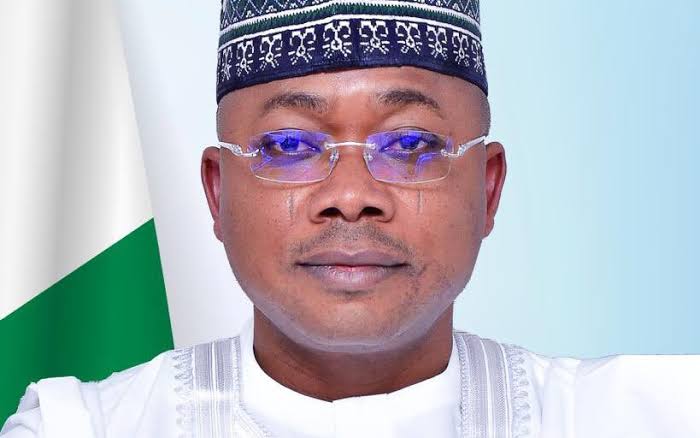
Gov Ododo
By Hon. (Elder) Ayo Thomas
The administration of Governor Ahmed Usman Ododo has initiated a structural shift in the governance of Kogi State by embedding youth empowerment and expansive infrastructure at the center of his governance agenda. By deliberately navigating away from the premature political friction that frequently stalls first-term executives, the administration offers a pragmatic case study in how targeted, people-first investments can catalyze rapid socio-economic transformation. At a time when states governments face escalating fiscal pressures, the current trajectory in Lokoja reflects a governance model that prioritizes long-term institutional stability over temporary political optics.
This governance strategy is underpinned by a series of aggressive, data-driven interventions aimed directly at activating the state’s significant youth demographic. Moving beyond rhetorical commitments, the executive governor has deployed substantial capital to foster grassroots economic independence, notably through the launch of the Kogi Youth Entrepreneurship and Business Grant Programme, backed by a ₦300 million support envelope. This macro-investment is sustained by a decentralized distribution model which injects ₦50 million monthly across all 21 Local Government Areas specifically to scale youth-led enterprises. To ensure these financial inputs yield sustainable outcomes, the state collaborated with Malivelihood to establish the Kogi Youth Mining and Jewelry Craftsmanship Empowerment Program, providing technical skills aligned with the state’s natural resource endowments, while simultaneously protecting educational access through the consistent funding of student bursaries, scholarships, and regional examination fees.
Simultaneously, Governor Ododo has accelerated capital expenditure through major infrastructural projects designed to integrate Kogi State into broader national and international trade networks. Chief among these is the ongoing development of the Kogi International Airport, a strategic asset being executed by top-tier engineering firms to transform the state into a central logistical hub for agricultural and mineral exports. On the domestic front, the administration is tackling urbanization challenges via the Ododo Villa housing scheme, an ambitious project delivering 1,050 modern housing units distributed equally across the three senatorial districts. Furthermore, the construction of the Ododo Youth House a state-of-the-art innovation hub financed via public-private partnerships provides a permanent infrastructure for technological incubation and digital career mentoring, bridging the gap between local talent and the global digital economy.
These extensive developments are supported by a framework of disciplined fiscal management and robust security strategies that have significantly enhanced the state’s overall economic health. Under Governor Ododo’s financial stewardship, Kogi State has aggressively optimized its balance sheet, reducing its inherited domestic debt from ₦121 billion to approximately ₦35 billion, a move that substantially restores the state’s creditworthiness and frees up revenues for critical capital projects. This fiscal headroom has also guaranteed the punctual, 100 percent payment of civil servant salaries, reinforcing public sector productivity.
To protect these economic gains, the administration overhauled its security architecture by distributing 120 specialized patrol vehicles and 44 motorcycles, alongside incorporating 50 localized hunters per Local Government Area into a coordinated community-policing network that effectively safeguards agrarian and industrial zones, driving a steady 3.8 percent expansion in the state’s Gross Domestic Product.
The driving force behind this institutional momentum is Governor Ododo’s distinct leadership philosophy, characterized by administrative humility, corporate loyalty, and a conspicuous rejection of executive excess. Operating on the core conviction that sustainable development can only occur when citizens enjoy absolute financial stability, institutional unity, and physical security, the governor has maintained a high-intensity administrative pace that treats public office as a demanding stewardship rather than a seat of absolute power. By continually pressing for systemic efficiency and refusing to lower the momentum of public works, his executive character functions as an institutional catalyst, positioning the state government as an enabler of human capacity rather than a bureaucratic bottleneck.
Ultimately, the successful execution of this sweeping governance blueprint relies heavily on the structured alignment between the executive and the citizenry it serves. Significant credit for this cooperative progress belongs to the organized youth constituency of Kogi State, effectively mobilized under the strategic leadership of Ambassador John Oladele Nihi, the Special Adviser to the Governor on Students and Youth Matters. Through sophisticated grassroots diplomacy and structured engagement, Nihi has galvanized the state’s younger demographic to formally recognize Governor Ododo as an authentic representative of their own generational interests. Backed by structured grassroots diplomacy under Ambassador John Oladele Nihi, the state’s largest constituency is leading all other states in transitioning from passive onlookers to active partners in state building.
Today, it is very obvious that by actively partnering with executive policies rather than remaining passive observers, the youth of Kogi State have established a formidable united front, ensuring that the state’s current trajectory toward industrialization, security, and socio-economic equity remains institutionalized and resilient against future political shifts.
Thomas, Fellow of the American Academy of Project management, FAAPM,
Is Lead Advocate, Public Governance Advocacy Thrust, PGAT.