
Resurrecting Nigeria’s Sports Cradle: The Comrade Philip Shaibu Strategy
- Breaking News Front Page News Politics Sport
Demola Abimboye
- 0
- 4 minutes read
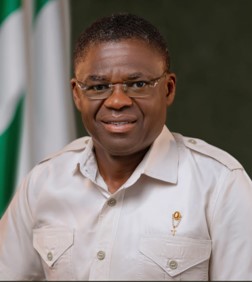
Phillip Shuaibu
By Ayo Thomas
Nigeria’s long-standing quest to reclaim its dominance on the global sports stage is finally finding its operational compass through a radical administrative shift at the country’s premier sports academy. At the helm of this transformation is Comrade Philip Shaibu, the Director-General and Chief Executive Officer of the National Institute for Sports (NIS). His novel approach to workforce development perfectly aligns with the Renewed Hope Agenda of President Bola Ahmed Tinubu.
For over half a century, Nigerian sports administration has suffered from institutional isolation, with key agencies operating in silos while local talent starved for contemporary technical guidance. Recognizing that a functional sports ecosystem cannot be built in a vacuum, Shaibu has aggressively deployed a multi-stakeholder collaborative model to revitalize the institute. This approach empowers the NIS to fulfill its foundational role: training elite coaches, sports administrators, and sports medicine professionals. It treats sports not merely as a pastime, but as a multi-billion naira industrial cycle that thrives exclusively on cross-sector integration.
Upon taking office, Shaibu immediately initiated sweeping reforms to bridge the gap between public policy and private-sector investment. He designed a comprehensive, 10-year working plan vetted by key sports stakeholders to institutionalize transparency and accountability. To build bulletproof investor confidence, the NIS has integrated private-sector representatives into its daily programs and committees. This arrangement allows corporate partners to directly oversee how their investments are managed—a transparent model Shaibu previously used to generate millions in sports revenue during his tenure as Deputy Governor of Edo State.
A brilliant manifestation of this strategy is the institute’s partnership with the federal ministry and corporate brands for the high-profile NIS FitLife program. This initiative aims to redefine marathon culture in Nigeria by transforming traditional races into full-day fitness and cultural experiences that integrate sports, entertainment, and wellness. This collaborative framework underscores how the sports and creative economies can collectively expand financial inclusion and engage young Nigerians.
Crucial to this administrative revival is the complete overhaul of the institute’s academic and technical curriculum to meet contemporary global standards. Under Shaibu’s leadership, the NIS has successfully restarted core foundational training programs after decades of dormancy, ensuring that the country’s tacticians and administrators are exposed to modern training methodologies. The rebranding effort extends beyond coaching to pioneer a specialized National Diploma in Paramedic Technology. This program aims to establish a robust workforce of sports medicine experts, physiotherapists, and trauma managers capable of protecting Nigerian athletic assets. Furthermore, by introducing a decentralized training model, the NIS is actively pushing its talent identification and coaching clinics out of exclusive urban centers and directly into grassroots communities, democratizing access to sports education across the federation.
Shaibu has also taken a courageous stance on infrastructure preservation. He is pushing for a nationwide prohibition on non-sporting events at premium venues like the Moshood Abiola National Stadium to protect Nigeria’s training turfs from rapid deterioration and ensure athletes have access to excellent facilities.
For this robust, multi-helix development model to achieve total national penetration, the federal government must extend its full legislative and financial backing to the institute. Nigeria possesses an extraordinary demographic asset, with a youth population exceeding 75 percent. This massive pool of human capital can productively engage tens of millions of citizens through a handful of key sporting disciplines. By funding the NIS as a primary driver of youth empowerment rather than a secondary bureaucratic expense, the government will effectively deploy sports as a potent weapon to combat unemployment, eliminate youth restiveness, and curb national insecurity.
Shaibu’s legendary execution drive was forged through years of public and private sector leadership, giving him a rare hybrid edge in administrative problem-solving. His relentless work ethic is evident internally, where he has instituted mandatory physical fitness and aerobics regimens for all principal officers. Through this, the institute intends to lead the nation’s healthy living campaigns by direct, uncompromising example.
It is therefore high time for President Bola Ahmed Tinubu to fully empower this collaborative machinery. Doing so will restore the historic legacy of the NIS as the cradle of sporting excellence, transforming Nigeria’s raw youth demographic into a golden era of record-breaking achievements across the global athletic arena.
Ayo Thomas is a project management expert and Design-Thinking Practitioner. He is a Fellow of the American Academy of Project Management, AAPM, USA. He is the Lead Advocate, Public Governance Advocacy Thrust, PGAT.