
SERIES PRELUDE: THE GHOSTS IN THE WAR ROOM: WHY TINUBU’S NEW SECURITY BLUEPRINT MUST DEFEAT THE LEGACY OF CONVENTIONAL THINKING
- Breaking News Front Page Judiciary & Crime News Politics
Demola Abimboye
- 0
- 8 minutes read
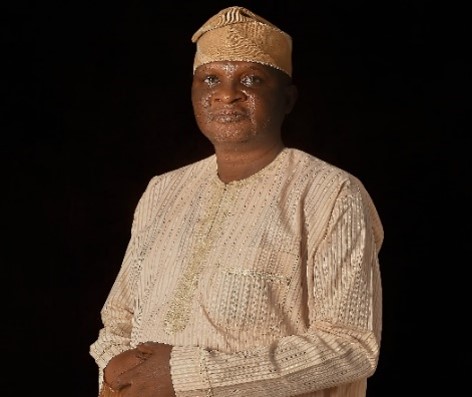
Ayo Thomas
By Ayo Thomas
Before the launch of my new 12-week column, “Homeland Security & the Citizen,” this introductory brief outlines the critical strategic hurdles facing Nigeria’s new defense committee.
When the Secretary to the Government of the Federation inaugurated the high-powered Presidential Committee in Abuja, the room carried the unmistakable weight of martial history and bureaucratic expectation. The gathering represented the absolute apex of Nigeria’s military, intelligence, and law enforcement establishment: the National Security Adviser, the Minister of Defence, the Service Chiefs, and the Directors-General of the nation’s premier intelligence agencies.
This cohort has been handed a strict 90-day ultimatum to design a comprehensive national threat matrix mapped directly to a rolling five-year strategic defense blueprint. To a casual observer, the mandate appears to be a masterstroke of administrative precision — a logical shift from ad-hoc crisis management to an integrated system where funding follows actual theater threats rather than institutional prestige. Yet, for veteran observers of Nigeria’s defense trajectory over the last quarter-century, the moment triggers a profound sense of déjà vu. The most formidable adversary facing this committee is not hiding in the forests of the Northwest or the mangroves of the Niger Delta; it sits at the table in the form of a stubborn legacy mindset rooted in conventional, regimented thinking.

President Tinubu
There is no doubt that President Bola Ahmed Tinubu intends to transform the military and security agencies into models of operational efficiency and regional stability. By asserting that national security is the fundamental bedrock of Nigeria’s economic ambition, the President has correctly aligned the defense apparatus with the administration’s broader macroeconomic reforms. The logic is clear: a state cannot stabilize fiscal fundamentals, stimulate local manufacturing, or attract substantial foreign direct investment when it cannot guarantee the safety of lives, property, and trade routes. Former President Goodluck Jonathan also recently validated this philosophy, emphasizing that contemporary security is inextricably linked to economic development, technological innovation, and industrial capacity.
Internal security is therefore, inherently a development issue.
Nigeria’s security chiefs now have a rare opportunity to deploy their strategic knowledge as Design-Thinking solution architects. They must define and approach National security through three distinct lenses: internal security, homeland security, and national defense. This requires translating decades of institutional memory into fluid, practical operations tailored to an unconventional security landscape, rather than merely rehashing outdated tactical manuals.
The committee’s formal Terms of Reference are comprehensive and precisely targeted at ending fragmented operations while tying defense procurement directly to clear operational priorities. The panel must review principal and emerging threats, define theater-specific priorities, identify existing capability gaps in logistics and technology, and eliminate service-level rivalries in procurement. Furthermore, this framework must harmonize an array of existing and upcoming sectoral instruments, including the National Counter Terrorism Centre Strategic Plan, the National Strategy for combating organized crime, current counterterrorism doctrines, and the defense sector’s capital requirements plans.
However, the structural problem in Abuja has rarely been a lack of policy documentation. The committee’s assignment comes amid a crowded shelf of brilliant, unimplemented strategies and white papers, including the National Security Strategy of 2019, the Nigerian National Defence Policy of 2017, and various policies on securing cyberspace and preventing violent extremism. The tragic flaw of these past efforts was not their conceptual depth, but their execution. Most fell victim to a rigid bureaucratic culture that treated strategy as an administrative box-ticking exercise rather than a living operational directive.
Compounding these tangible operational hurdles is a more subtle danger dominating the national discourse: the systematic manipulation of cognitive spaces and the public mindset. A sophisticated, well-orchestrated information war is being waged against Nigeria’s security agencies, particularly the military. Domestic and international networks have driven a propaganda enterprise that consistently portrays the state apparatus as weak, disorganized, and incapable of securing the nation.
In modern conflict, when facts are poorly communicated or missing entirely, propaganda becomes the default reality. This communication deficit has isolated the military, forcing it to fight asymmetric battles without the vital psychological backing of the population. Because there is no structured narrative highlighting the tactical victories recorded daily in various theaters, the broader public rarely sees its own survival as directly linked to military success. To date, Nigeria has lacked a society-wide action plan to connect citizens with these victories, preventing the population from co-owning the security narrative. The resulting depletion of public trust severely undermines the state’s ability to use public diplomacy to rebuild a new momentum of National Potent Minimum Defence [NPMD] i.e. society-wide action plan needed to effectively sustain and win the Nationwide Safety campaigns.
Nigeria has arrived at this complex juncture because past security managers were frequently trapped in a conventional approach that failed to recognize a fundamental reality: information is a primary source of modern societal power. Social, informational, and cognitive spaces are active, strategic warfare domains where narrative control directly influences and impacts the political, economic, and military pillars of National Power. Conventional military thinking naturally prioritizes kinetic solutions — troops deployed, hardware purchased, and physical territory cleared. While physical dominance remains essential, it is insufficient against decentralized, networked, and digitally empowered threats that use narrative control to recruit, fundraise, and destabilize state legitimacy. If the Presidential Committee spends its 90 days focused exclusively on restructuring traditional service orders of battle and equipment wish lists, it will fail to address the root of the problem.
Design thinking on the part of the committee is therefore critical at this stage. It requires starting with the human element; understanding the fears, perceptions, and cognitive vulnerabilities of both the civilian population and the adversary. It demands an agile framework where intelligence sharing is instantaneous, inter-agency rivalry is actively penalized, and communication strategy is treated with the same operational seriousness as an amphibious assault or an aerial bombardment.
The mandate given to the homeland security team is an opportunity to break from the past. However, the ultimate success of this new security blueprint depends entirely on the intellectual courage of its authors to resist the comfort of conventional thinking and reject the bureaucratic momentum that neutralized previous strategic documents. The committee must deliver an operational blueprint that treats information operations, public trust, and cognitive defense as core capabilities of the national defense architecture.
To navigate this paradigm shift, the committee must study how Design Thinking applies directly to human-centered cognitive defense. Instead of asking the conventional bureaucratic question —“What hardware do we need to buy to stop propaganda?” — a Design-Thinking framework flips the focus to the end-user: the Nigerian citizen. By utilizing empathy mapping, defense planners can chart what the public actually hears, sees, thinks, and feels daily in volatile zones. Through rapid ideation, instead of releasing dry, delayed press statements after a crisis, the military can co-create localized narrative centers that turn real-time tactical victories into immersive digital stories owned by the community. Finally, by treating communication as an iterative prototype, the defense apparatus can continuously measure public trust metrics, adjusting information deployment dynamically rather than waiting for five-year policy reviews. This approach transforms the civilian populace from passive spectators into the ultimate human firewall, shielding the military’s rear guard from cognitive manipulation.
The military and security chiefs must prove they can think outside the limits of traditional bureaucracy to support President Tinubu’s vision of a secure, resilient, and economically vibrant nation. The framework for cognitive defense shows that the true battle lines are drawn in the minds of the people. With the clock ticking on this critical 90-day mandate, the burden of execution falls heavily on leadership. It is now time for Major General Adeyinka Famadewa (Homeland Security Adviser) to fully justify his strategic appointment and prove his coordinator-ship of this vital committee by steering the nation away from stale, regimented doctrines toward an agile, victorious future. The country is watching closely, and history will judge the blueprint by its courage to innovate.

To support and maximize the presidential committee’s impact during this active 90-day window, I will be commencing a 12-week series of articles in my weekly column for TheStateNG.com titled, “Homeland Security & the Citizen.” The articles will directly address the core challenges the committee is trying to solve by framing the strategic roadmap through a human-centric lens. This series aims to help citizens understand why a unified national security framework matters, while offering practical advisory on civil-military synergy and cognitive defense strategies.
Ayo Thomas is project management expert; fellow of the American Academy of Project Management, AAPM; Civil-Military Relations Advocate and a Design Thinking practitioner. He can be reached on 07043441046 (WhatsApp only).