
Jamil Abubakar Unveils Dangote’s Vision for Africa’s Largest Seaport in Ogun
- Breaking News Business & Economy Front Page News Politics
Demola Abimboye
- 0
- 2 minutes read
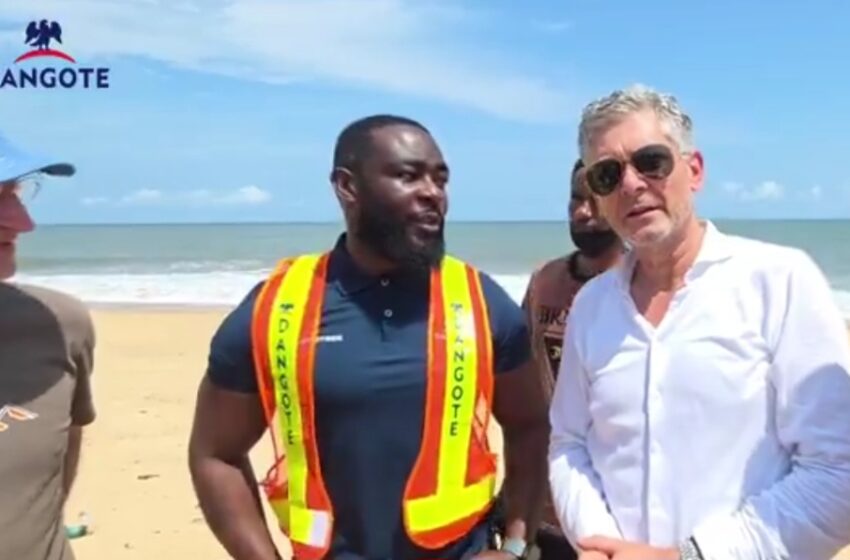
Pix: Jamil Abubakar with experts working on Africa’s biggest seaport project.
Dangote Industries Limited has intensified preparations for its proposed Deep Seaport project in Ogun State, with the company holding a strategic engagement session with residents of Ode Omi Community as plans for what is expected to become Africa’s largest seaport gather momentum.
The community engagement was led by Captain Jamil Abubakar, Managing Director, Infrastructure and Logistics at Dangote Industries Limited. Captain Abubakar, who is the son of former Inspector-General of Police, M.D. Abubakar, and son-in-law of Nigerian billionaire Aliko Dangote, said the meeting was part of efforts to strengthen collaboration with stakeholders ahead of the commencement of the ambitious project.
The proposed deep seaport is expected to significantly boost Nigeria’s maritime capacity, enhance trade facilitation, improve logistics infrastructure and stimulate economic growth across the country and the West African sub-region.
According to Dangote Industries, the engagement provided an opportunity to share details of the project’s vision with members of the host community, address concerns, and reinforce the company’s commitment to inclusive development and sustainable partnerships.
The company stressed the importance of maintaining open dialogue with the people of Ode Omi, noting that community participation remains a critical component of the project’s planning and implementation process.
Industry observers believe the proposed seaport could transform Nigeria’s maritime landscape by easing pressure on existing ports, attracting fresh investments and creating thousands of direct and indirect jobs.
Beyond its anticipated impact on trade and logistics, the project is also expected to serve as a catalyst for industrialisation, regional connectivity and long-term economic development.
The latest engagement underscores Dangote Industries’ determination to ensure that host communities remain key stakeholders in the development process as work progresses on one of the continent’s most ambitious infrastructure projects.