
I Don’t Know How to Cry Again
- Breaking News Front Page Judiciary & Crime News Politics
Demola Abimboye
- 0
- 6 minutes read
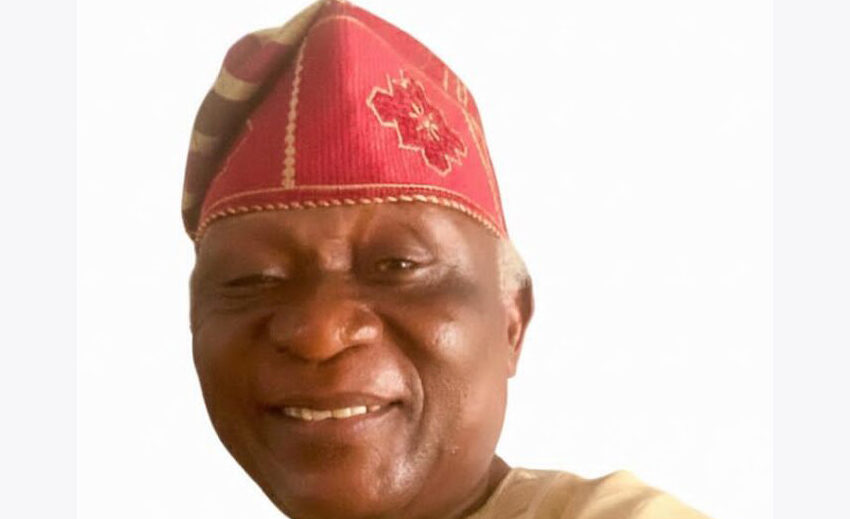
Segun Adediran
By Segun Adediran
I read the account of one of the schoolchildren recently rescued after the May 15 mass abduction from schools in Oyo State’s Oriire Local Government Area, Bello Hassan. He said, “When they were to kill our teacher, Mr Michael, they took him to a corner to kill him, although the killing did not happen in my presence but we heard his shout, that was the same thing they did to Deacon, who was also killed.” There is a point where suffering outgrows the capacity for tears. In Nigeria, that threshold was crossed long ago—at least for people like me. My eyes have run dry.
To understand our present despair, we must trace it from May 29, 1999. The birth of Nigeria’s Fourth Republic arrived with the grand promise of democratic renewal. Instead, twenty-seven years later, it has evolved into a highly sophisticated machine of mass impoverishment. What we have institutionalised is a cruel “democracy without development.” Power circulates within a recycled political class prioritising state-sponsored self-enrichment, high-cost governance, and prebendalism over the public good.
Economically, the persistent failure to diversify from oil, combined with systemic corruption and severe macroeconomic volatility, has proved catastrophic. The recent removal of the fuel subsidy and the floating of the Naira have plunged millions into grave misery, sinking them further into poverty.
I have watched this tragedy unfold over decades, sometimes with tears rolling down my cheeks. We wept for the victims of the November 1999 Odi Massacre, where military forces levelled an entire town and killed up to 2,000 civilians. We cried over the September 2001 Jos Riots, which claimed more than 1,000 lives and flared up repeatedly in 2008 and 2010. We mourned the October 2001 Zaki-Biam Massacre; the May 2004 Yelwa Massacre and the horrific January 2015 Baga Massacre, where Boko Haram slaughtered an estimated 2,000 people.
We felt the collective stab of the April 2014 Chibok girls’ abduction, followed by the December 2015 Zaria Massacre, the February 2018 Dapchi schoolgirls’ kidnapping, the June 2022 Owo Catholic Church Massacre, and, recently, the shocking February 2026 Kwara State Massacre where over 200 residents were executed.
By now, I don’t know how to cry again. This is not a declaration of strength; it is the quiet, chilling sound of trauma turning into stone. It is the language of a populace so systematically battered by soaring food prices, relentless insecurity, and broken promises that the emotional well has run entirely dry.
While millions of Nigerians numb themselves to survive, our leaders remain insulated in a parallel universe of astonishing, hyper-visible luxury. This stark contrast is more than a moral failure; it is a systemic threat to the nation’s survival.
Estimates indicate that roughly 141 million Nigerians—a staggering 63 per cent of the population—are trapped in multidimensional poverty. Decades of oil wealth have yielded an economy where the middle class has been virtually hollowed out, leaving a tiny elite at the top and a desperate majority at the bottom. Rocketing inflation has turned basic daily survival into a brutal struggle.
Yet, the political class continues to indulge in spectacular displays of wealth. Public outrage has boiled over regarding multi-billion naira acquisitions, including a luxurious new presidential jet and a controversial $6 million “presidential yacht” tucked into supplementary budgets. Members of the National Assembly—already among the highest-paid lawmakers in the world—routinely vote to purchase fleets of imported SUVs costing tens of millions of dollars. As the saying goes, in Nigeria, politics is the easiest way for an idiot to ride a horse.
The wealth extracted from the public treasury is rarely reinvested domestically. Instead, it is exported to buy luxury real estate in Dubai and London, fund lavish overseas weddings, and secure premium medical care abroad—all while local hospitals lack basic bandages. This is conspicuous consumption in its most violent form. It actively mocks the misery of the governed, sending a clear message: Your sacrifice is mandatory, but our comfort is non-negotiable.
This opulence is particularly intolerable against a backdrop of profound insecurity. In northern and central Nigeria, farmers cannot access their lands for fear of bandits and kidnappers. When a state fails to guarantee the most basic human right—the right to life—it forfeits its moral authority. When its leaders respond by retreating behind armoured convoys and flying over ruined roads in private helicopters, they tear the social contract to shreds.
The inability to cry marks the death of expectation. When you stop crying, you stop hoping. And when a population loses both hope and something to lose, the quiet numbness of despair can rapidly ignite into unpredictable, chaotic rage.
Yet, without a drop of tears in my eyes, I am still hoping against hope that maybe one day, the “beautiful ones” will finally emerge. If Nigeria is to avert a catastrophic collapse of trust, its leadership must pivot immediately from predatory governance to a model of stewardship. Our politicians should transform from rulers to leaders; look to examples like Zambian President Hakainde Hichilema, who famously rejected the purchase of new luxury vehicles upon taking office, choosing to save public funds instead.
Furthermore, the budget process must be stripped of its opaque, frivolous “line items” that serve as conduits for patronage. Citizens should not have to rely on leakages or scandals to discover how their tax money is being spent.
Finally, Nigeria’s economic model must transition away from an extractive system designed to distribute resource wealth among a select few. Government policy must aggressively prioritise domestic production. Resources must be diverted from political maintenance into high-yield sectors: reviving agricultural security, funding public education, and building a reliable power grid that allows small businesses to survive without costly generators. This is the ultimate form of national security—one far more humane, and infinitely more effective, than mere kinetic force.
Nigeria’s leaders must realise that the current trajectory is mathematically and socially unsustainable. You cannot rule over a graveyard of despair and expect to remain secure in your palaces.
The dry eyes of the Nigerian public are not a sign of peace; they are a warning. It is time for Abuja to put away the yachts, ground the luxury jets, and finally listen to the silent, dangerous grief of the people they were chosen to serve.
But for me, I don’t know how to cry again!
Adediran, a journalist, author, and former Chairman of the Editorial Board of PUNCH Newspapers can be reached via olusegunadediran@gmail.com.